
Hear AI-generated music before shaping your jazz scene
Preview verified AI-generated tracks for inspiration, then use the AI Jazz Music Generator to define your own ensemble, swing, harmony, solo language, and atmosphere. General examples are not presented as dedicated jazz demos.

Open Window

Palm Juice Ride

Midnight on My Sleeve
Shape a complete scene with an AI Jazz Music Generator
The AI Jazz Music Generator turns a mood, scene, prompt, or your own lyrics into a complete music track. Define the jazz world, ensemble size, rhythmic feel, harmonic color, lead voice, solo exchange, form, and emotional destination so the AI Jazz Music Generator can interpret a coherent scene rather than one vague genre label.
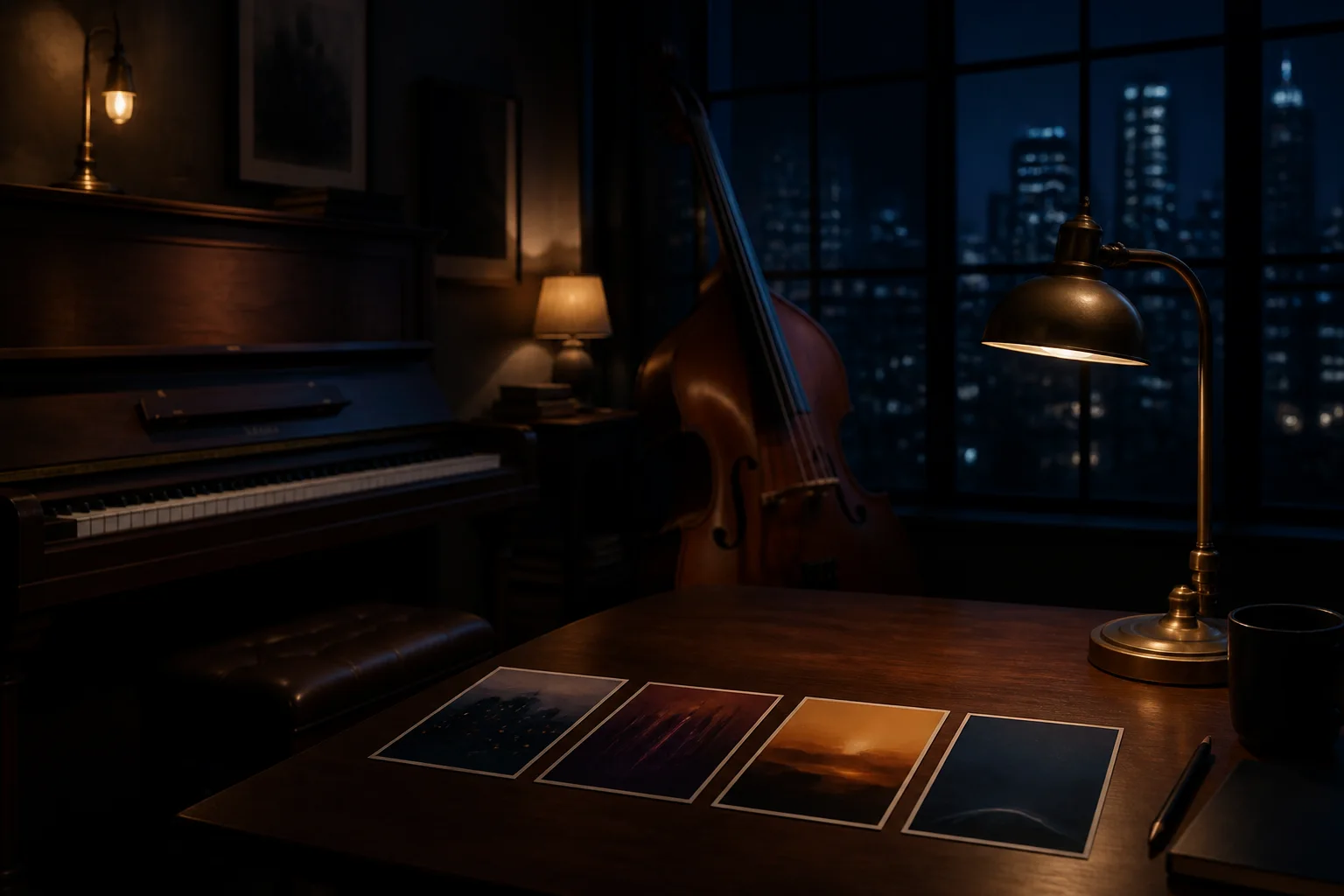
Begin with a room, hour, and emotional temperature
Describe where the music lives: a late-night club, bright café, ballroom, seaside bar, rehearsal room, film-noir street, or open festival stage. Tell the AI Jazz Music Generator whether the scene feels intimate, restless, elegant, playful, tense, warm, or unresolved, then connect that mood to a specific listener or visual moment.
Describe the jazz scene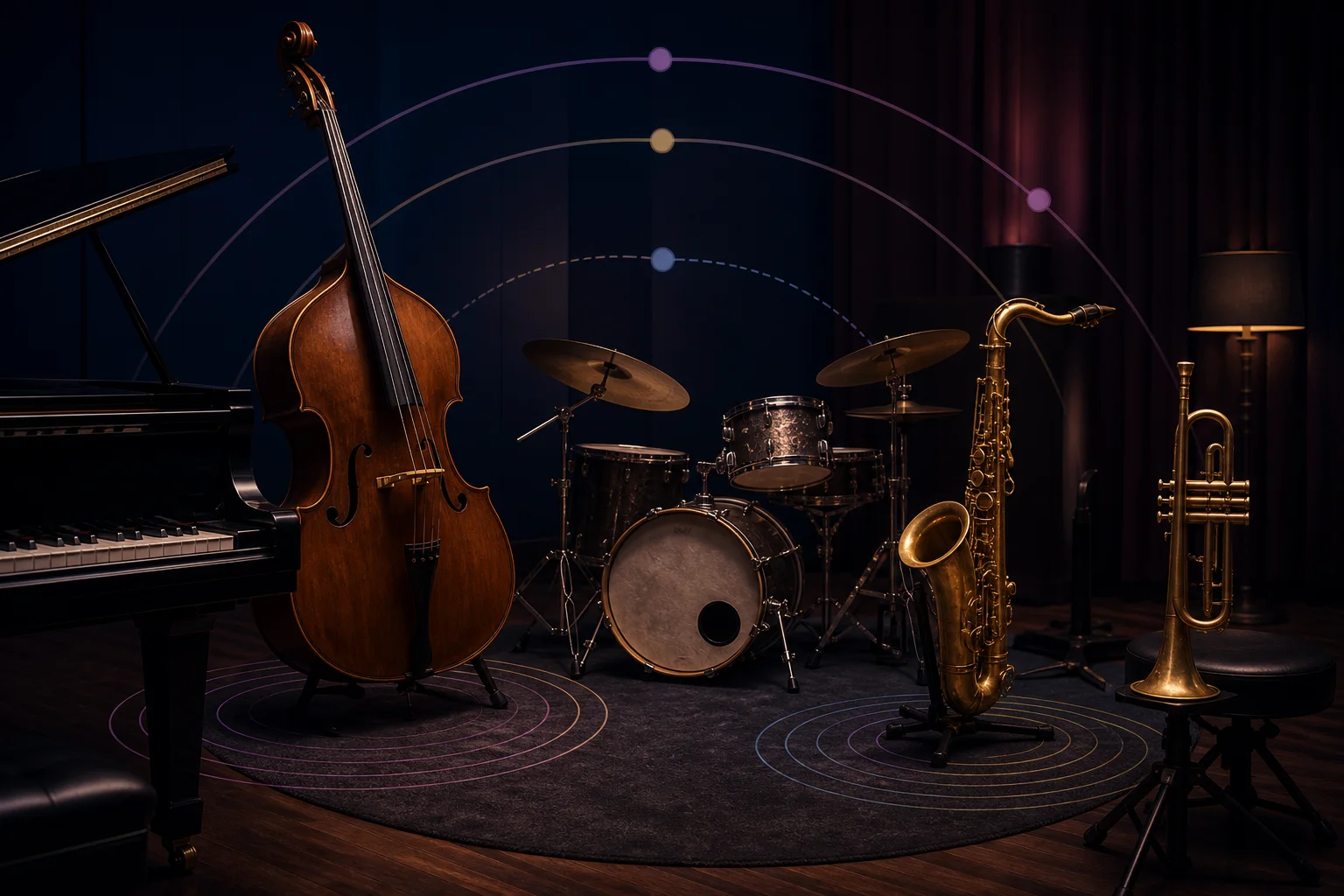
Choose the ensemble, pulse, and solo language
Give the AI Jazz Music Generator a focused palette: piano trio, saxophone quartet, muted trumpet, guitar, big band brass, walking bass, brushed drums, bossa pulse, fast swing, or spacious ballad time. Explain which instrument states the theme, who answers, how long solos should feel, and whether the ensemble trades phrases or stays behind a vocal.
Shape the ensemble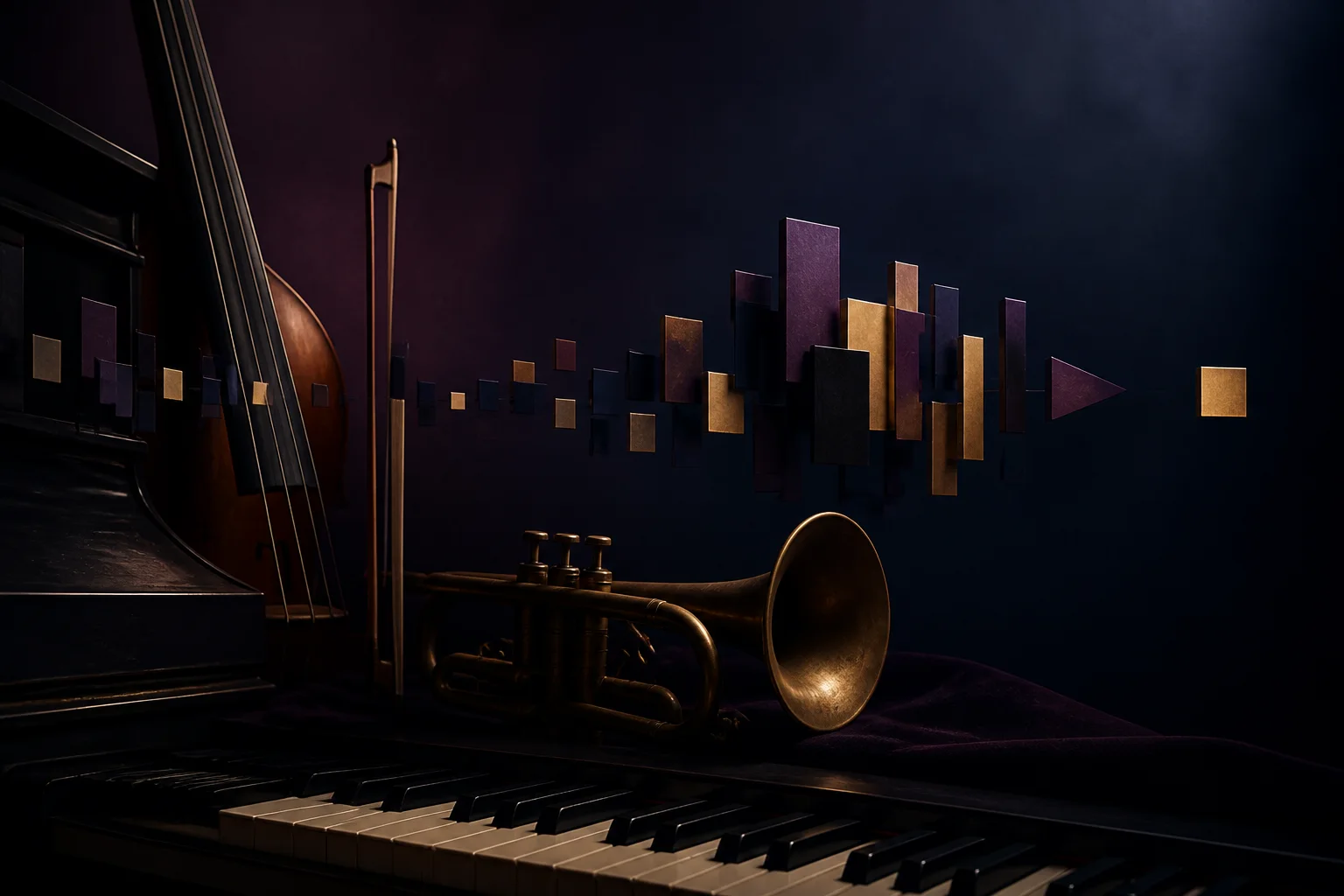
Guide harmony, contrast, and the ending
Describe warm extended chords, blues movement, modal space, chromatic tension, a key change, sparse introduction, louder ensemble peak, quiet solo return, or an ending that resolves or remains open. The AI Jazz Music Generator uses these as creative priorities, while exact theory and timing remain interpretive. Use the broader AI Music Generator for a genre-neutral beginning.
Explore the AI Music GeneratorWho creates with an AI Jazz Music Generator?
An AI Jazz Music Generator helps creators hear how ensemble, rhythm, harmony, improvisational space, and atmosphere can support a story. Each audience can give the AI Jazz Music Generator a different scene and a different definition of a successful result.
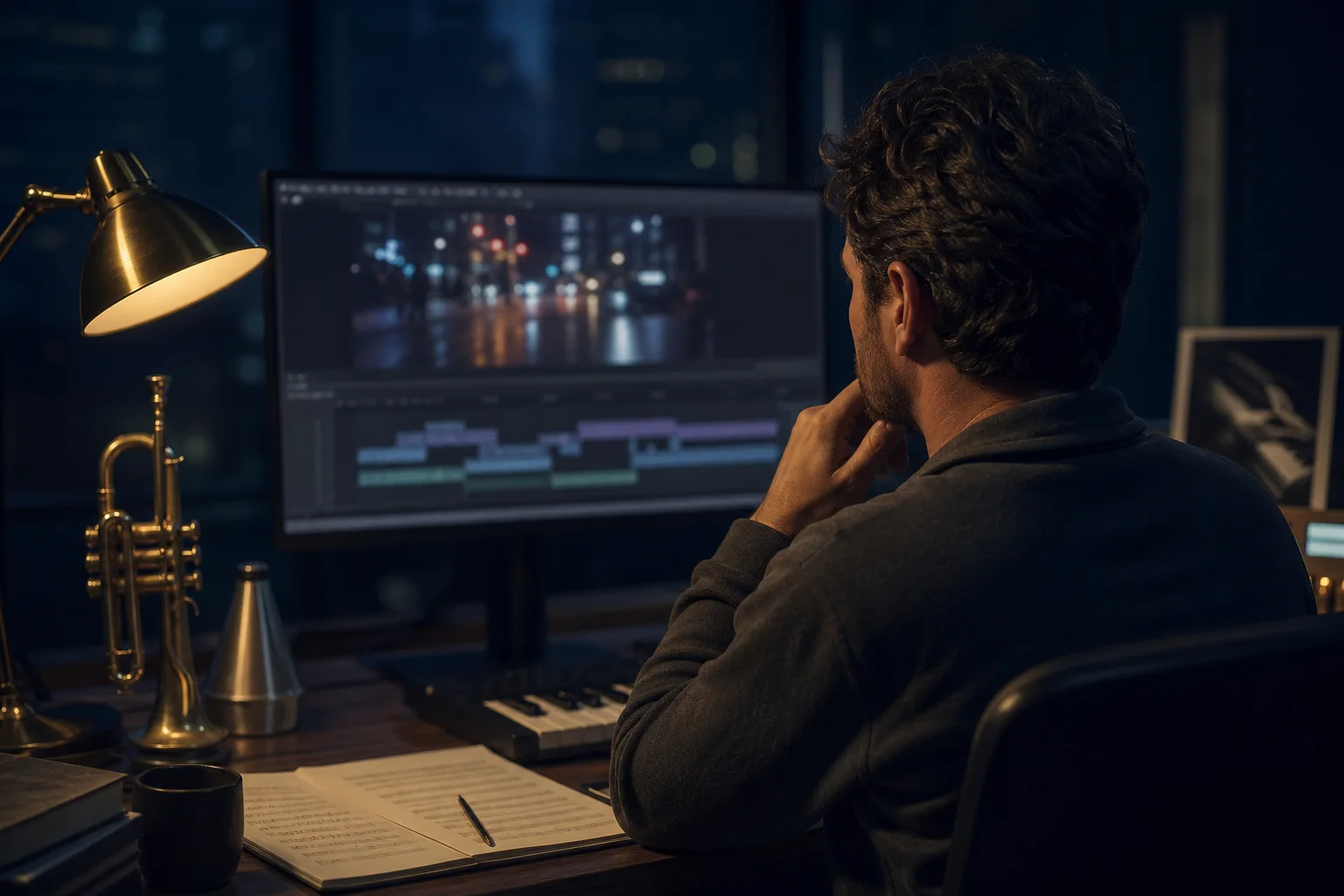
Filmmakers and visual storytellers
Sketch cues for night streets, quiet conversations, elegant entrances, uneasy investigations, travel scenes, memory sequences, cafés, and closing credits. The AI Jazz Music Generator can follow the scene more clearly when the prompt marks its emotional starting point, turning moment, instrumental foreground, and ending.
Songwriters and vocal creators
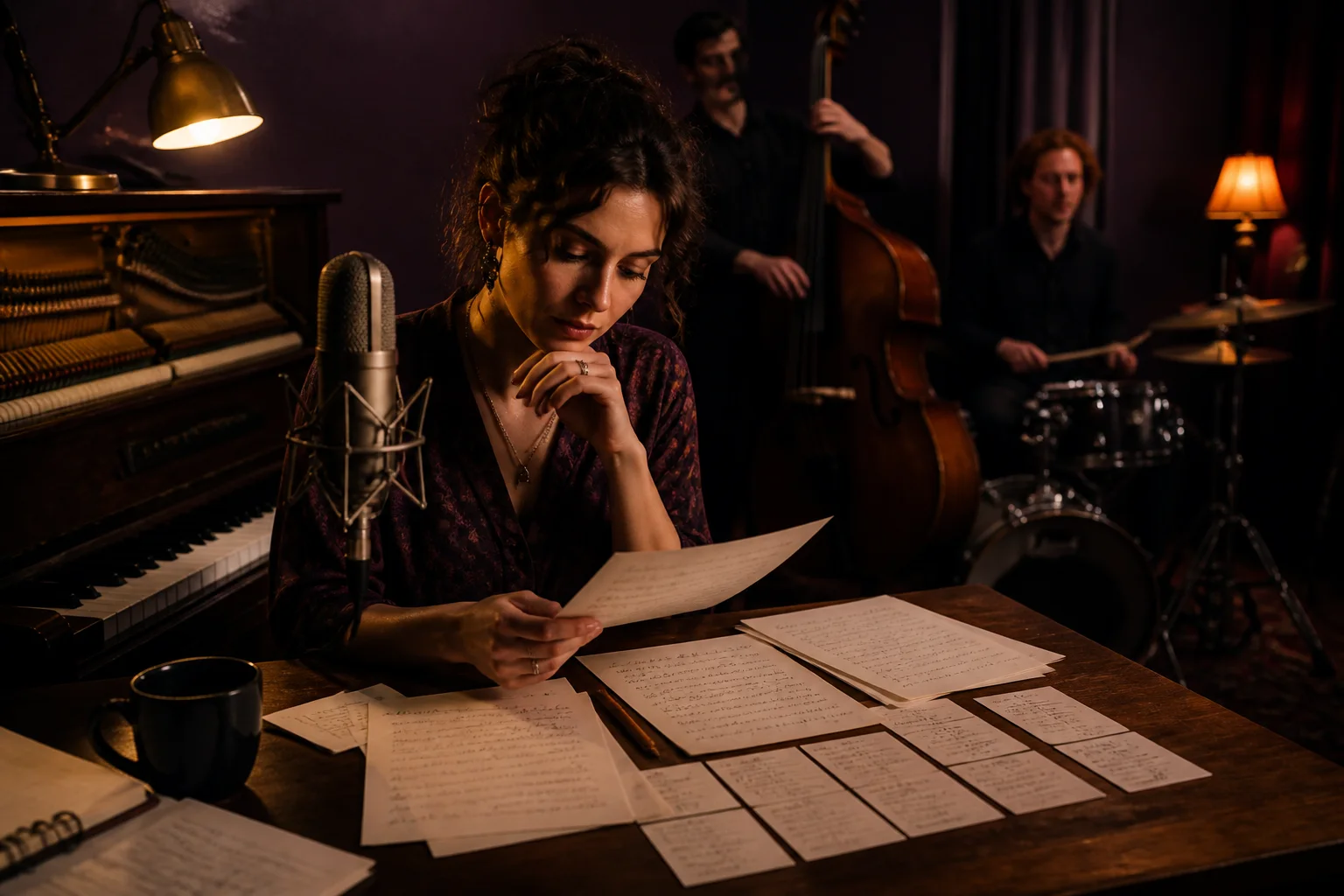
Hear how original lyrics sit against a piano trio, bossa pulse, smooth-jazz texture, small combo, or larger arrangement. Use the AI Jazz Music Generator to compare intimate phrasing, conversational verses, a floating refrain, instrumental answers, and a final line that leaves harmonic space.
Podcast, game, and hospitality creators
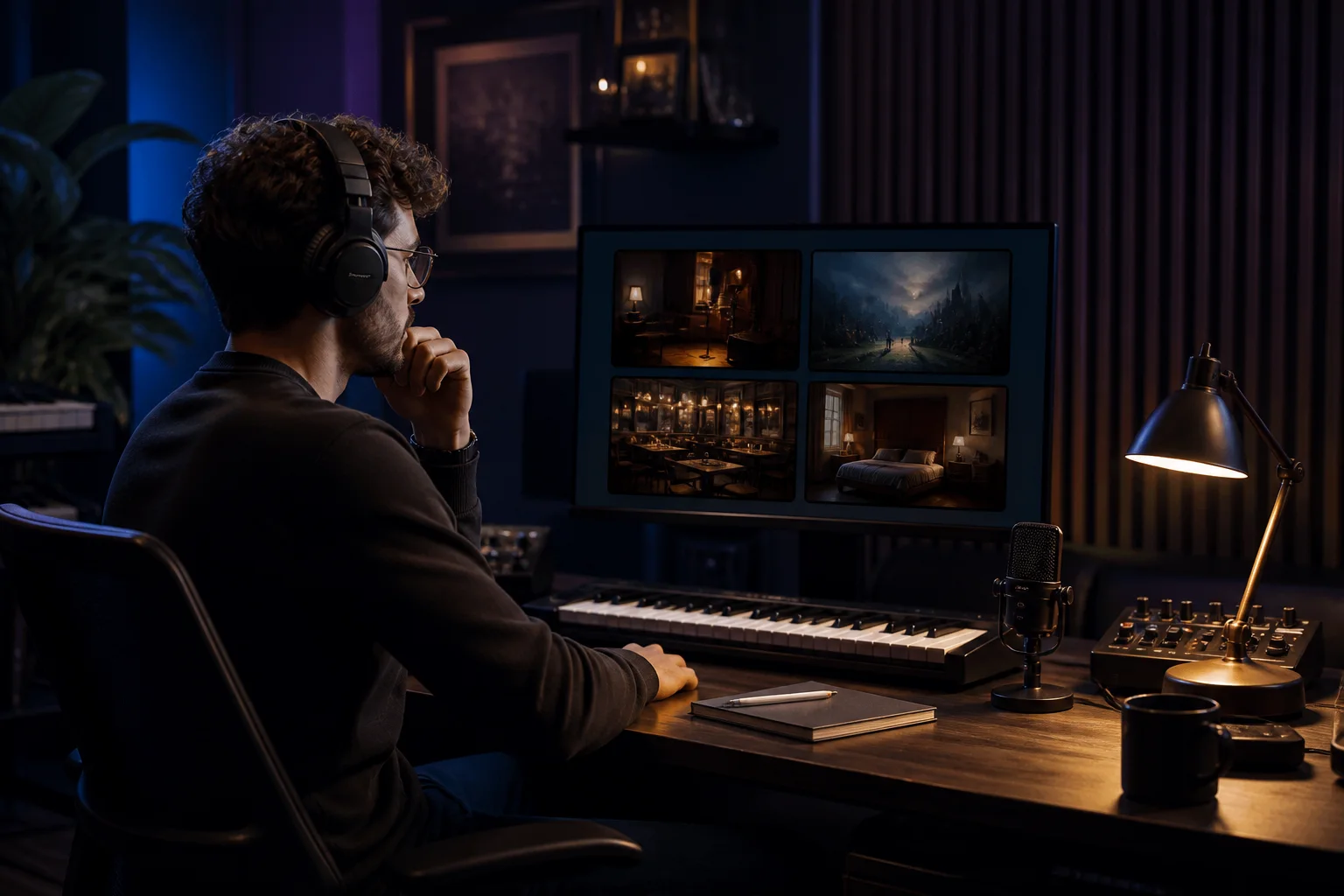
Create directions for spoken-word openings, lounge spaces, menus, detective worlds, character rooms, restaurants, hotel scenes, and reflective interludes. An instrumental AI Jazz Music Generator brief can leave room for dialogue, ambience, and interaction while giving the setting a distinct musical identity.
Composers exploring arrangement
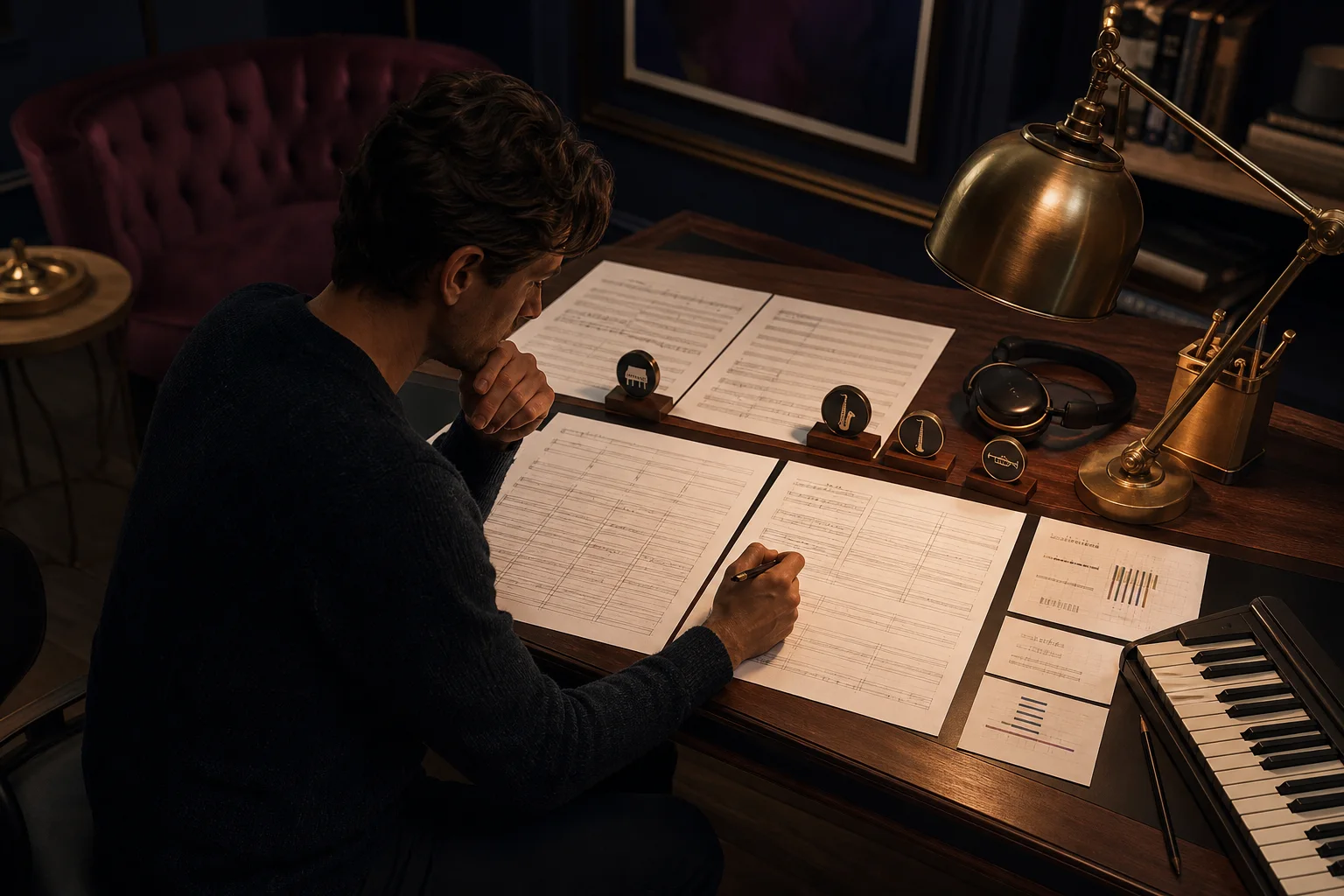
Compare how a melody changes with walking bass, brushes, a straight-eighth feel, swing, brass weight, guitar comping, or a smaller rhythm section. The AI Jazz Music Generator offers complete studies to analyze and revise without replacing musicianship, transcription, orchestration, mixing, or final mastering.
How to use an AI Jazz Music Generator
Treat the AI Jazz Music Generator like an ensemble receiving a compact scene note. Choose the jazz world and purpose, identify the musicians and emotional movement, then generate, listen, and revise the few directions that most affect the result.
Choose the jazz world and scene
Name piano trio, bebop, smooth jazz, bossa jazz, big band, jazz noir, vocal jazz, or a deliberate hybrid. Add the physical place, time of day, listener, visual context, and emotional destination. Tell the AI Jazz Music Generator whether the result should be a vocal song or instrumental cue, without asking for a named performer's identity.
Add ensemble, feel, harmony, and form
Tell the AI Jazz Music Generator which instrument leads, how bass and drums move, whether the feel swings or stays straight, and where solos, ensemble answers, vocal passages, breaks, builds, or key changes occur. If you use custom mode, provide only lyrics you own or have permission to use.
Generate and revise the emotional movement
Listen for whether the opening establishes the room, the ensemble leaves enough space, the solo role is clear, the middle creates contrast, and the ending matches the scene. Change one or two priorities in the AI Jazz Music Generator prompt, such as instrumentation, pulse, harmonic color, solo density, or final cadence, then compare results.
AI Jazz Music Generator FAQ
Answers about complete jazz tracks, ensembles, prompts, lyrics, instrumentals, improvisation, performer imitation, and usage rights.